What Are AI Influencers? Virtual Influencers Explained
AI influencers are digital characters with their own looks, personality and social accounts. How they are made, real examples, and how brands use them.
For most of history, if you wanted to win someone over, you had to stand in front of them.
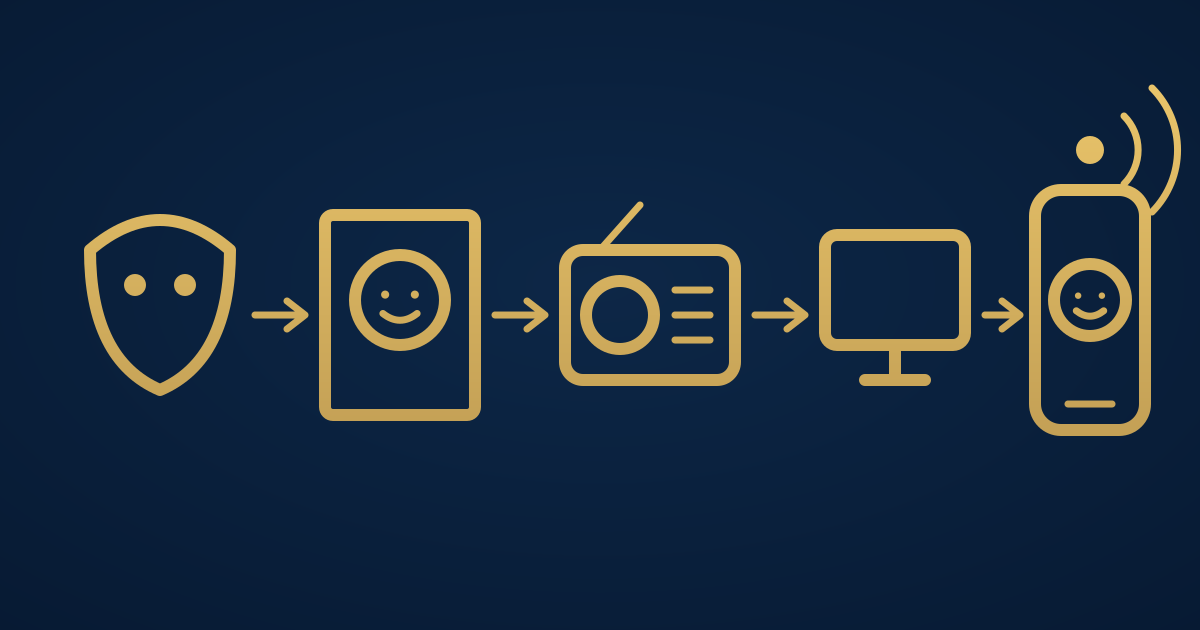
In villages across Rajasthan, Gujarat and Bengal, the bahurupiya made a living from that. The name means "many forms". One day he arrived as a king, the next as a god or a policeman, in a costume so convincing that, by tradition, he only asked for a reward if the audience had believed him. Everyone knew he was playing a character. They gathered anyway, because the character was worth watching.
Then the image learned to travel without the person. In 1894, Raja Ravi Varma set up a press that printed his paintings as oleographs, and the same picture of Saraswati or Lakshmi was soon hanging in thousands of homes. Decades later, those same images were selling soap on calendars.
Then the voice travelled too. From 1952, Ameen Sayani's Binaca Geetmala went out on Radio Ceylon, and millions of listeners across India felt they knew a man most of them would never see. Television did the same for faces, replaying them in every living room.
Each step put more distance between the person and the audience: from the street, to the print, to the radio, to the screen. Each time, people still found someone to follow.
An AI influencer is the next step. For the first time, there doesn't have to be a person behind the face at all: only a character, a team that writes it, and an audience that decides whether it's worth following. Just as the bahurupiya's audience did.
An AI influencer is a creator that someone designed rather than discovered. It has a name, a face, a personality and its own Instagram or YouTube account, but its photos and videos come from AI and 3D tools, not a camera. Brands work with AI influencers the way they work with human creators: sponsored posts, product launches, campaigns. The difference is that the studio or brand behind the character controls every post.
This guide explains what AI influencers are, how they are made, some well-known examples, and when they make sense for a brand.
AI Influencers: The Core Idea
People use "AI influencer" and "virtual influencer" for the same thing: a digital character that behaves like a social media creator.
What makes them different from human creators
- Full creative control. Every outfit, caption and pose is decided by the team behind the character.
- Always available. No scheduling conflicts, travel, or reshoots that depend on someone's calendar.
- Consistent. The look and tone stay the same across hundreds of posts.
- Fully disclosed. In India, ASCI's influencer guidelines require virtual influencers to tell audiences up front that they are not real people.
The key principle
An AI influencer is still a brand voice with an audience. It only works if people find the character interesting enough to follow, just like a human creator.
Well-Known Examples
| AI influencer | Known for | |
|---|---|---|
| Lil Miquela | @lilmiquela | One of the first widely known virtual influencers (2016); fashion work with brands such as Prada and Calvin Klein |
| Imma | @imma.gram | Japanese virtual model; collaborations including IKEA Japan and Porsche |
| Aitana López | @fit_aitana | AI-generated fashion and fitness model created by The Clueless agency in Barcelona |
| Kyra | @kyraonig | Often described as India's first virtual influencer (2022); debut campaign with boAt |
These accounts are examples of the format. They were created by other companies, not FootPrynt.
Key insight: The best-known AI influencers have a clear personality and point of view. The technology makes the content; the character is what people follow.
How an AI Influencer Is Made — Step by Step
- Define the persona. Name, age range, style, interests, tone of voice, and what the character stands for. This decides which brands and audiences it fits.
- Design the look. Create a consistent face and body using AI image tools or 3D modelling, so the character is recognisable in every post.
- Produce content. Generate photos, short videos and reels with AI tools, guided by a creative team. Real products can be placed into scenes.
- Write the voice. Captions, replies and scripts stay in character. Most teams keep humans in charge of anything published.
- Publish and disclose. Post on the character's own accounts or the brand's, labelled clearly as AI-generated and as paid content where applicable.
- Measure. Track reach, engagement and sales the same way you track human creator campaigns.
(See also: AI Influencer vs Human Influencer: Which Should Your Brand Use?)
Common Mistakes to Avoid
Mistake 1: Treating it as a shortcut to followers
A new AI influencer starts with zero audience, just like a new human creator. Plan for audience building, or use the character on your brand's own channels and in ads instead.
Mistake 2: An inconsistent character
If the face, voice or style shifts from post to post, people stop recognising the character. Consistency is the whole point.
Mistake 3: Hiding that it's AI
Audiences notice, and in India it is also required. ASCI's guidelines say virtual influencers must disclose that consumers are not interacting with a real person. Hiding it damages trust in your brand.
When AI Influencers Make Sense
| Situation | Why an AI influencer helps |
|---|---|
| You need lots of content quickly | Content can be produced without shoots |
| You want a long-term brand character | The persona stays yours, consistent for years |
| You test many ad creatives | Variants are fast to produce |
| The right human creator is hard to find | You can design the creator you need |
They work best alongside human creators, not instead of them: human creators for authenticity and existing audiences, AI influencers for volume, consistency and control.
(See also: AI Influencers in India: A Practical Guide for Brands)
The bahurupiya's rule still applies. An audience stays only while the character is convincing, and only if it knows what it's watching. Design the character with care, and disclose it clearly.
How FootPrynt Can Help
FootPrynt creates AI influencer personas and AI-generated content for brands: reels, product visuals and ad creatives. Today our team delivers this as a managed service, with your approval at every step, and we are building it into Maarg AI.
Tags
Ready to Scale Your Influencer Marketing?
Join 1,000+ brands using FootPrynt's AI platform for influencer discovery, outreach, and attribution.
Start Free Trial →