Social Media Engagement Rates Are Falling: What It Means for Your Brand
Understand why organic reach is declining across platforms and discover proven strategies to adapt your social media marketing for algorithm success.
Billions of Users, Zero Dollars Paid
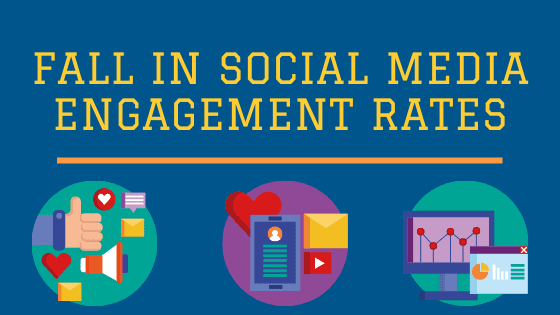
Billions of internet users pay nothing to use social media platforms. This leaves marketers wondering how Instagram, Facebook, and TikTok generate billions in revenue while offering free access to everyone.
The answer is simple: advertising. Social media platforms gather massive audiences in one place, then charge businesses to reach them. And the less organic reach they give you for free, the more you spend on ads.
"If you're not paying for a product, you are the product."
— Netflix's The Social Dilemma
The Golden Age of Organic Growth (And Why It's Over)
From 2010 to 2015, social media offered something remarkable: genuinely free reach. A brand with 100,000 followers could reach 80,000+ of them with a single post, at zero cost.
What made the golden age special:
- Content supply and demand were roughly balanced
- Algorithms prioritised chronological feeds, not ad revenue
- Creators and brands could build significant audiences without buying reach
- Engagement rates of 8–12% were normal on Facebook
Then the algorithm shift happened.
The Algorithm Shift: When Organic Reach Started Dying
Platforms realised that limiting organic reach created a revenue opportunity. Show brands their posts reaching fewer followers → brands pay for ads to compensate.
Facebook's Organic Reach Decline
| Year | Organic Reach Rate |
|---|---|
| 2013 | 12.05% |
| 2014 | 6.15% (-49%) |
| 2016 | 2.0% |
| 2019 | 1.0% |
| 2024 | 0.5–1.5% |
That's a 90%+ decline in 11 years.
Instagram's Engagement Drop
| Period | Average Engagement Rate |
|---|---|
| 2018 | 3.5% |
| 2020 | 1.6% → 1.22% (mid-year drop) |
| 2022 | 0.83% |
| 2024 | 0.54% |
The pattern is the same across every platform: more content, more competition for feed space, more algorithm control.
The core dynamic: Platforms designed their algorithms to maximise time-on-platform (to show more ads) — not to show followers your content.
Why This Happened: The Platform Revenue Model
Social media platforms operate on a simple flywheel:
- Attract users with free features
- Scale to billions of users
- Reduce organic reach gradually
- Charge businesses to maintain their former reach
- Use engagement-maximising algorithms to keep users scrolling (to show more ads)
This isn't conspiracy — it's disclosed in every platform's investor presentation. Instagram's algorithm now shows content based on predicted engagement score, not follower relationships.
How Instagram's Algorithm Actually Works (2026)
Instagram weighs six factors to determine what you see in your feed:
| Signal | What It Measures |
|---|---|
| Interest | Predicted likelihood you'll engage with this content |
| Relationship | How often you interact with this account |
| Timeliness | Recency of the post |
| Frequency | How often you open the app |
| Following | Total accounts you follow (more = less shown per account) |
| Usage | Time spent per session |
Implication for brands: Even if someone follows your account, they may not see your posts if they don't regularly engage with you. The algorithm learns from inaction.
Impact on Brands and Influencers
Impact on Influencers
- Lower engagement levels reduce brand deal attractiveness
- Revenue from existing partnerships under pressure
- Pressure to pay for boosted posts to maintain brand relationships
- Audience authenticity becomes harder to prove as bot-following scales
Impact on Brands
- Cost to maintain former organic reach has shifted to paid media
- Influencer selection more complex — follower count is a vanity metric
- Campaign ROI calculations require proper attribution (UTMs, promo codes)
- Long-term brand strategies must account for continuing decline
Strategies That Still Work
For Brands
1. Partner with highly engaged micro-influencers
Micro-influencers (5K–50K followers) maintain 4–7% engagement rates because their audiences are genuinely interested communities, not passive mass audiences. They're less affected by algorithmic suppression.
2. Invest in Reels and short-form video
Every platform is currently giving preferential reach to short-form video. Instagram Reels gets 2–3x the organic reach of static posts. Use it.
3. Build owned media alongside social
Email lists, SMS, and your own website don't have algorithms. Brands with strong owned media channels are algorithm-proof. Use social to acquire, email to retain.
4. Diversify across platforms
Don't put all reach into one platform. A brand building simultaneously on Instagram, YouTube, and LinkedIn is resilient to any single platform's algorithm change.
5. Focus on engagement rate, not follower count
An influencer with 8K followers and 6% engagement will outperform an influencer with 200K followers and 0.5% engagement every time.
For Content Creators
- Post consistently at your audience's peak activity times
- Engage with comments within the first 60 minutes (algorithm reads early engagement as a quality signal)
- Use all content formats your platform offers (Reels, Stories, Carousels) — platforms reward creators who use new features
- Build an email list as a backstop to your social following
- Analyse performance weekly and double down on content types that beat your average
The Silver Lining: Quality Over Quantity
The decline in organic reach has had one positive effect: it's pushed out low-effort content. Brands that create genuinely useful, entertaining, or emotional content still see strong organic performance.
Metrics that matter more than follower count:
- Engagement rate (likes + comments + shares ÷ reach)
- Save rate (saves are the strongest positive signal to Instagram's algorithm)
- Profile visits from posts (indicates real discovery intent)
- Story reply rate (measures genuine connection)
- Click-through rate to website
The Bottom Line
Organic social reach isn't coming back to 2013 levels. The platforms have a financial incentive to keep it low. The smartest brands have accepted this and built their strategy accordingly:
- Use organic social for brand building, community, and content distribution
- Use paid social for guaranteed reach and performance campaigns
- Use influencer marketing for trust transfer at scale — authentic recommendations beat ads
- Use owned media (email, website) for audience relationships you control
The algorithm changes aren't the end of social media marketing. They're the beginning of more strategic, authentic, and effective approaches — if you adapt.
FootPrynt helps brands adapt — connecting you with high-engagement micro-influencers whose audiences are genuinely active, and providing the attribution tools to measure what actually drives ROI.
Tags
Ready to Scale Your Influencer Marketing?
Join 1,000+ brands using FootPrynt's AI platform for influencer discovery, outreach, and attribution.
Start Free Trial →